
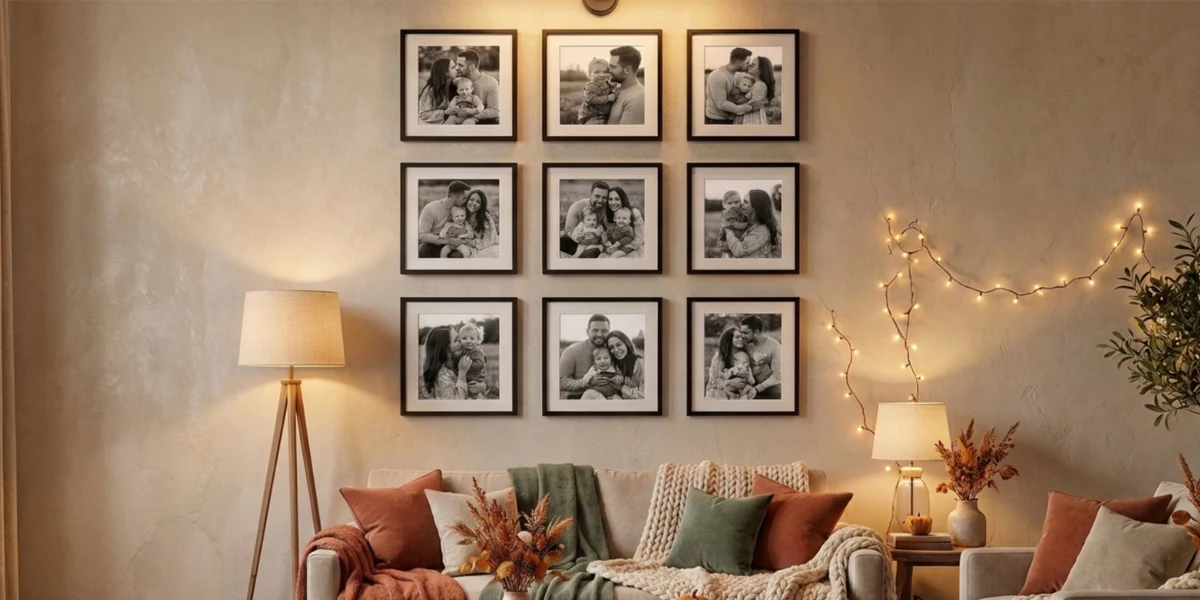
How to Create the Perfect Gallery Wall: Layout Ideas, Frames, and Lighting
A great gallery wall isn’t about buying the most frames, it’s about picking the right two or three things and using them well. This guide walks through real gallery wall layout ideas, the frame set and picture light that make the whole thing come together, and the mistakes that turn a gallery wall from “curated” into “cluttered.”
Why Gallery Walls Are Still One of the Most-Searched Home Decor Ideas
Gallery walls solve a real problem: blank walls feel unfinished, but a single piece of art often feels too sparse for a living room or hallway. A gallery wall fills the space with intention, mixing photos, prints, and art into one cohesive display instead of scattering single frames around a room. It’s also one of the few decor ideas that works in almost any style, minimalist, vintage, boho, or modern, which is exactly why “gallery wall ideas” and “gallery wall inspo” stay consistently searched terms on Pinterest.
The Frame Set: Fisnish 12×12 Picture Frame Set of 10
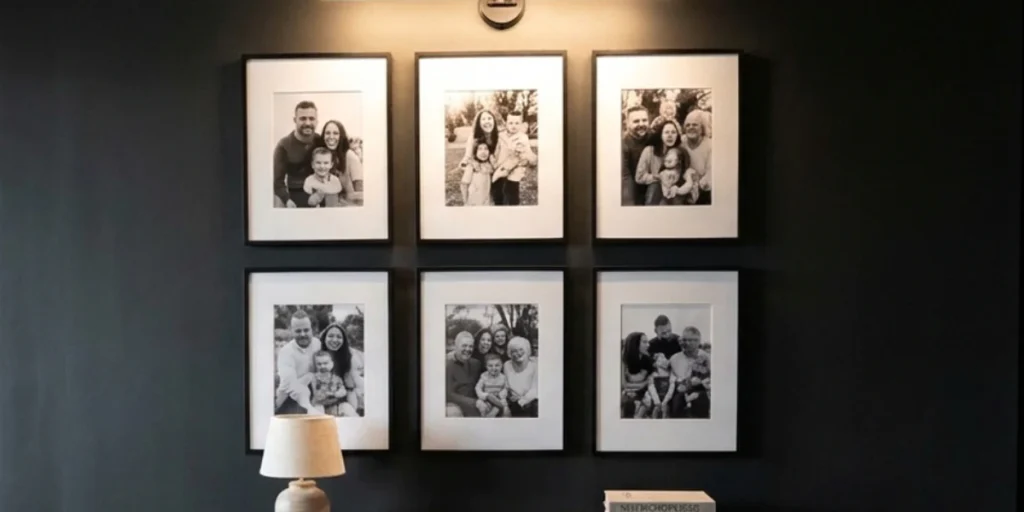
Overall Rating: 4.6/5
Best For: Building a full gallery wall set without buying frames one at a time.
Pros
- 4.6/5 across 1,079 real reviews, a genuinely large, trustworthy sample
- 96.6% positive on versatility, buyers use these for art prints, photos, kids’ artwork, and even movie posters
- 94.7% positive on value for money, repeatedly described as a great price for a full 10-piece set
- Lightweight and easy to hang, spring-loaded backs make swapping photos genuinely simple
Cons
- Uses a plastic glazing, not real glass, this is a real, split opinion, some buyers prefer it since it’s safer and command-strip friendly, others specifically wanted glass and were disappointed
- Durability is the one area with real, honest pushback, only 26% positive on that specific theme, with multiple buyers reporting the plexiglass cracking specifically while peeling off the protective film, plus general scratching over time
- A handful of buyers found the actual size ran slightly different than expected
Who It’s For
Anyone building a full gallery wall on a budget who wants a matching, cohesive set rather than mismatched individual frames. Peel the protective film carefully given the cracking reports, and this is a genuinely well-loved set.
The Picture Light: GUIMUIZ 39″ Hardwired Picture Light
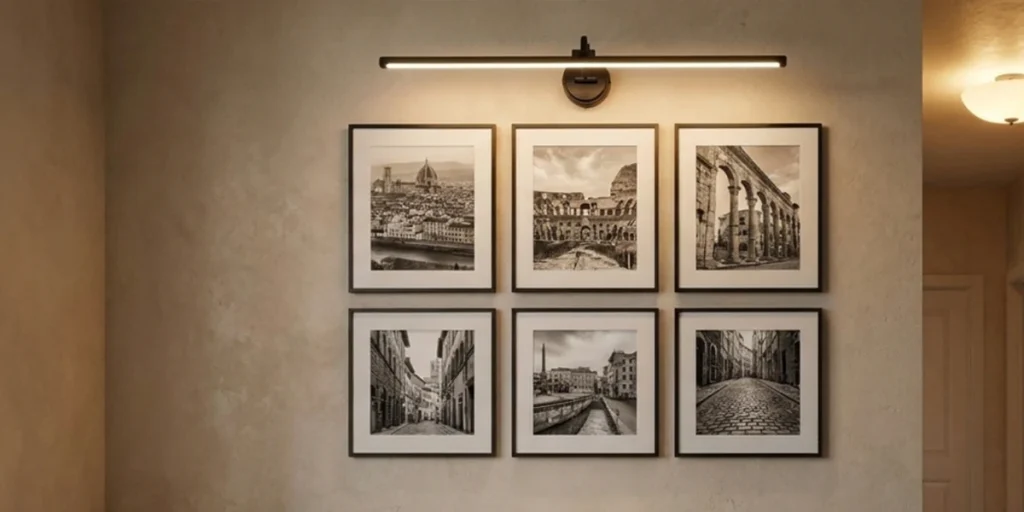
Overall Rating: 5.0/5
Best For: Adding a real gallery-quality finishing touch to a large gallery wall arrangement.
Pros
- 5.0/5 across early reviews, genuinely enthusiastic, specific feedback: “looks much more expensive than it is,” easy installation, bright and even coverage
- Three color temperature options plus 10-100% dimming, real flexibility for different art pieces and moods
- Hardwired directly to your existing wall switch or dimmer, no batteries to ever replace
- One reviewer who owns both the 24″ and this longer size confirms the design and quality are consistent across lengths
Cons
- This is a newer listing with a small review sample, several of the available reviews are through Amazon’s Vine program (free product in exchange for an honest review), genuine feedback, but not yet the large organic review base the frame set has
- Requires hardwiring to a junction box, this isn’t a plug-and-play fixture, some comfort with basic electrical installation (or a licensed installer) is worth planning for
Who It’s For
Anyone who wants their gallery wall to read as genuinely curated rather than just “frames on a wall.” This is the detail that elevates a DIY gallery wall into something that looks professionally styled.
Gallery Wall Layout Ideas That Actually Work
Before you hang anything, lay your frames out on the floor first, this is the single most useful gallery wall tip that gets skipped. Here are a few layout approaches worth trying:
The Grid Layout
Even spacing, matching frame sizes, straight rows and columns. This is the cleanest, most modern take on a gallery wall art arrangement, and it’s exactly what a matching 10-piece frame set like the Fisnish set is built for.
The Salon-Style Cluster
Mixed frame sizes and orientations, arranged closer together with less rigid spacing. This is the classic vintage gallery wall look, and it pairs especially well if you’re mixing in a mirror or two among your frames for a mirror gallery wall variation.
The Anchored Layout
One larger, central piece with smaller frames arranged around it. This works particularly well under a picture light, since the light can be centered above the anchor piece and still cast even light across the smaller surrounding frames.
How to Plan and Hang Your Gallery Wall
Start by tracing each frame onto kraft paper or newspaper, then tape the paper templates to your wall to test the layout before you commit to any nail holes. Keep 2-3 inches of spacing between frames for a cohesive but not cramped look. Hang the largest or most central piece first at eye level, roughly 57-60 inches from the floor to the center of the frame, then build outward from there.
If you’re adding a picture light, plan its placement after your frame layout is finalized, not before, so it’s centered correctly over the finished arrangement rather than forcing your frames to fit around the light.
Common Gallery Wall Mistakes to Avoid
Hanging everything too high. A gallery wall should feel like it’s part of the room, not floating above it, keep the visual center around eye level.
Skipping the paper template step. This is the fastest way to end up with unnecessary nail holes.
Using frames that are all exactly the same distance apart with no visual anchor. Even in a clean grid layout, one slightly larger or centered piece gives the eye somewhere to land first.
Forgetting lighting entirely. A gallery wall without any dedicated light source often gets lost in a room, especially at night, this is the detail that makes the difference between a wall that looks decorated and one that looks styled.
Frequently Asked Questions
How many frames do I need for a gallery wall?
There’s no fixed number, but 8-12 frames is a common sweet spot for a full wall arrangement, which is part of why a 10-piece set works well as a starting point.
Do I need glass frames for a gallery wall?
Not necessarily. Plastic glazing, like the Fisnish set uses, is lighter, safer, and often compatible with adhesive strips instead of nails, though it’s worth knowing it’s less scratch-resistant than glass over time.
Is a picture light necessary, or just decorative?
It’s genuinely both. Beyond the visual upgrade, a dedicated picture light means your gallery wall stays visible and intentional-looking at night, not just during the day.
Can I hang a picture light without hardwiring it?
Some picture lights come in battery-powered or rechargeable versions if you’d rather avoid electrical work, but the hardwired version featured here offers more consistent brightness without ever needing a recharge.
What’s the best gallery wall layout for a small hallway?
A vertical cluster or a narrow grid tends to work best in tight spaces, keeping the arrangement tall rather than wide so it doesn’t crowd the walkway.
If you’re planning a full room refresh alongside your gallery wall, our Small-Space Bedroom Planning Checklist ✅ free printable can help you map out furniture and wall space before you start hanging anything.
This article may contain affiliate links. If you purchase through these links, Zenspiro may earn a small commission at no additional cost to you. We only recommend products we believe offer genuine value based on our research and evaluation.
One thought on “How to Create the Perfect Gallery Wall: Layout Ideas, Frames, and Lighting”